

Seed swaps: how they work, what to bring, and how to find one
A seed swap is a free way to try new varieties and share the ones you have saved. How a swap runs, what to bring and how to label it, what not to swap, what the rules say, and how to find one near you.
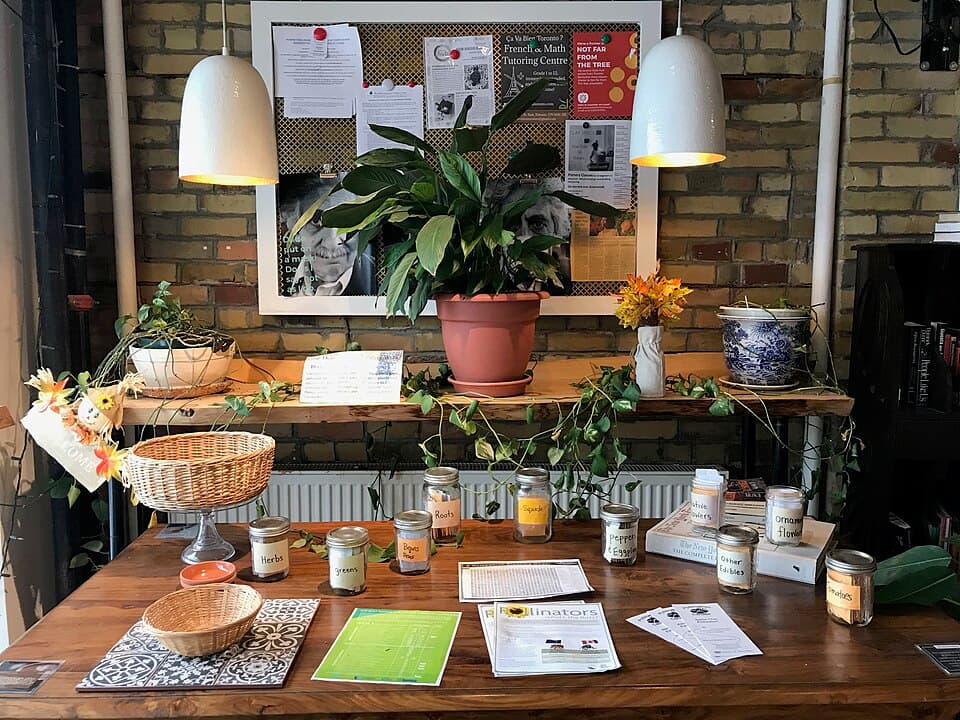
What a seed swap is
A seed swap is a gathering where gardeners trade or share seed. People bring seed they saved from their own plants, leftover packets they will not use, or seed donated by companies, then browse tables of other people's offerings and take what they want to try. Organizers or experienced seed savers are often on hand to answer questions and keep track of how much seed is changing hands. Swaps are a good way to get varieties that grow well in your area, meet gardeners nearby, and avoid buying a whole packet for a handful of plants.
- Gather your seed
Collect saved seed, leftover packets, and anything you have too much of.
- Label every packet
Write what it is, the variety, and when and where it was grown.
- Bring it to the swap
Sign in, set your seed on a table, and look around.
- Take what you will grow
Ask questions, take small amounts, and share your growing notes.
- Share the results
Next year, report back and save seed from what worked.
What to bring, and how to label it
Good labels make a swap work. Seed Savers Exchange, which publishes a guide to organizing swaps, recommends labelling the crop type, common name, variety, the year the seed was collected, and where it was grown, plus any notes on how it performed. At a minimum, South Dakota State University Extension suggests the variety and the year collected. Swap organizers often post a sign saying that germination is not guaranteed, because stored seed loses viability over time. A quick sprout test on a damp paper towel is a simple way to check whether old seed is still alive before you share it.
A good seed label
- Crop and common name (for example, bean)
- Variety name, if you know it
- Year the seed was collected
- Where it was grown, even just the neighborhood
- A short note: flavour, vigor, days to harvest, how you grew it
What not to bring
Seed Savers Exchange lists several kinds of seed that do not belong at a swap, and South Dakota State University Extension's guide agrees: illegal plants, genetically engineered plants, poisonous or noxious plants, patented varieties, F1 hybrids, and unidentified seed from volunteer plants. F1 hybrids do not grow true from saved seed, so what comes up next year will not match what you shared. If a packet came with a patent or plant-variety-protection notice, do not swap it.
Saving seed that is worth sharing
Quality starts in the garden. Save seed from healthy plants that grew well for you, and label as you go so you do not lose track of varieties. Beans, peas, and tomatoes mostly pollinate themselves, which makes them the easiest crops for beginners. Squash, cucumbers, and melons cross easily with other varieties of the same kind, so seed from a garden with several types may not come true. If you are unsure, say so on the label. An honest note such as "may have crossed with a neighbor's squash" is more useful than a confident guess.
Store seed cool, dry, and dark, and label the year. Most seed is best used within a few years, although this varies by crop.
Is it legal?
Sharing seed informally between gardeners is a long-standing practice, but seed laws mostly regulate selling seed, and the details differ by place. A few examples of what we could confirm.
In the United States, seed regulation is mostly handled by states. Seed libraries have run into trouble with state seed laws before. In Pennsylvania, a library was told in 2014 that its seed lending violated the state Seed Act. The state agriculture department later said non-commercial seed libraries and exchanges that do not sell seed fall outside the Act's licensing, labelling, and testing rules, according to a legal advocacy group's account of the decision. Other states have taken other approaches, so check your own state department of agriculture before you organize a large swap or lend seed through a library. South Dakota State University Extension notes that small-scale sharing is generally fine when no seed is sold, but that moving seed across state lines is regulated and that federal noxious weeds must not be moved.
In Canada, the Canadian Food Inspection Agency says the Seeds Regulations apply to seed that is sold, imported, or exported, and to seed released into the environment. Its page does not mention swaps, so we cannot say officially that swaps are exempt. If you plan something beyond a small swap among friends, confirm with the CFIA.
This is general information, not legal advice. Two other rules matter for gardeners. Patented varieties cannot be saved for seed, and many plant varieties have plant-variety-protection rights, so check packets for notices. And seed marked with the Open Source Seed Initiative pledge can be used freely, provided you pass the pledge on to anyone you share it with.
- AlwaysDo not sell at a swap
Free swapping is the common case that the rules treat differently from selling.
- CheckYour state or province
Contact your state department of agriculture or the CFIA before organizing a big swap.
- AvoidPatented or protected varieties
Look for patent or plant-variety-protection notices on the packet.
- Look forOpen Source Seed Initiative
Pledged seed can be used freely if you pass the pledge on.
When swaps happen, and how to find one
Swaps often run from January to March, ahead of spring planting, and are usually held at libraries, markets, garden festivals, and community gardens. National Seed Swap Day falls on the last Saturday of January, and Seed Savers Exchange points to its events page for upcoming swaps. Other places to look:
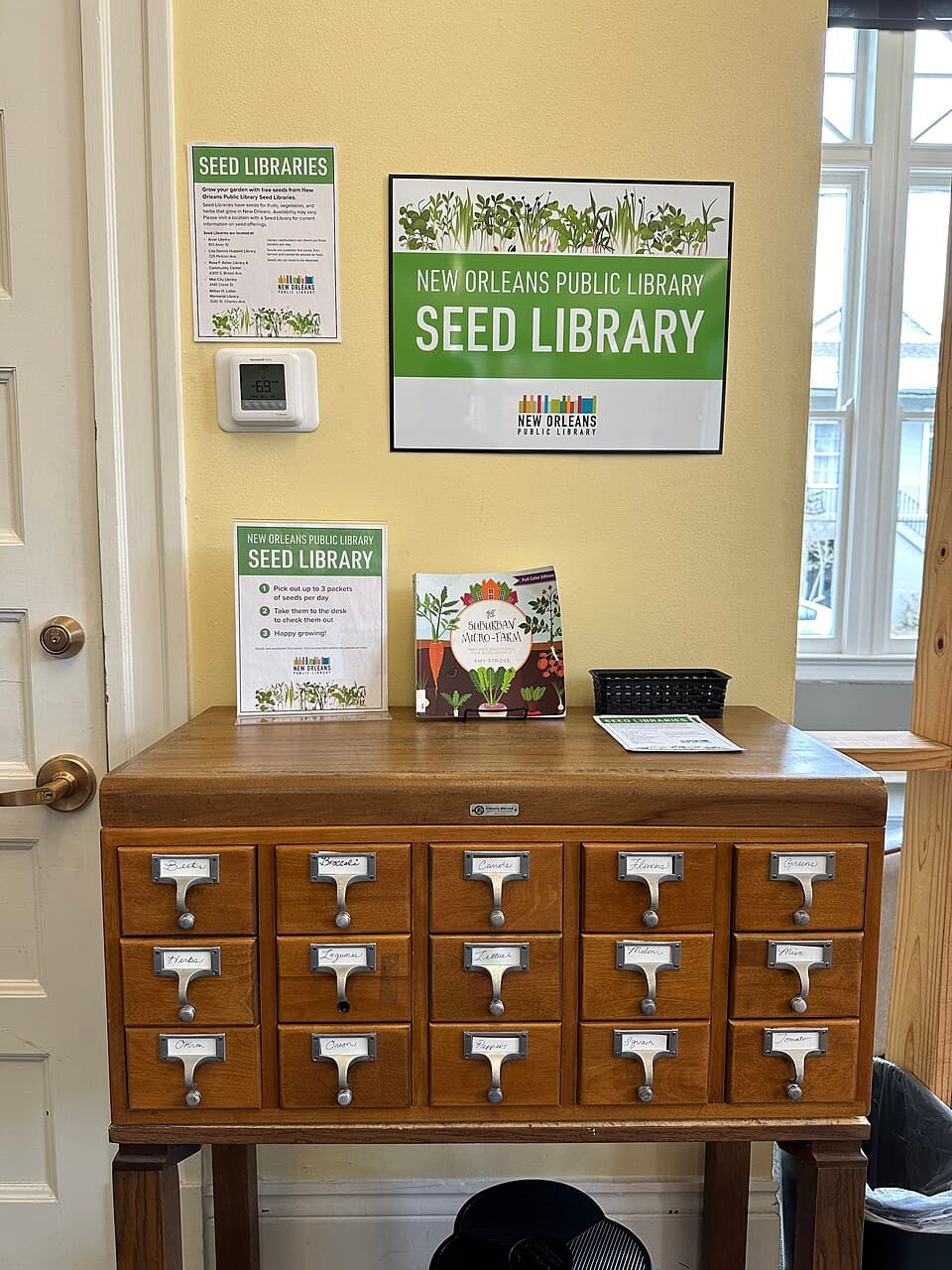
- Your public library, which often has a seed library or hosts swaps.
- Your local extension or Master Gardener program.
- A nearby community garden, which may hold a swap or know of one. See how to find a community garden near you.
- The Seed Library Network's map of seed libraries.
- In Canada, the Seeds of Diversity events listing, which you can filter by province. Local volunteers run the individual Seedy Saturday and Seedy Sunday events.
- Neighbors who garden. See gardening with neighbors.
- Late summer to fall
Harvest and save seed from your best plants. Dry it fully before storing.
- Winter
Sort and label your seed, and look for swaps near you.
- January to March
Peak swap season, including National Seed Swap Day in late January.
- Spring
Plant what you traded and keep notes to share next year.
Start a small swap with your neighbors
You do not need an event. A shelf at a community garden, a table at a neighborhood gathering, or a box on a porch with envelopes, a pencil, and a sign-in sheet is enough. Set a few simple rules: label what you bring, take small amounts, and leave leftovers for the garden or a seed library. If you want to organize something bigger, Seed Savers Exchange's guide to organizing a swap is a good place to start. And if you are looking for people to swap with, Growers Ground is a map-first garden sharing app where nearby gardeners and hosts appear as pins; it is rolling out city by city and you can join the waitlist on the home page.
Sources
- Seed Savers Exchange: How to organize a seed swap
- South Dakota State University Extension: How to organize a seed swap
- Public Interest Law: seed libraries in Pennsylvania allowed to engage in free seed exchange
- CFIA: Seeds Regulations frequently asked questions
- Open Source Seed Initiative
- Seed Library Network
- Seeds of Diversity: events
Growers Ground is rolling out city by city across the US and Canada. Join the waitlist to hear when your area opens.
Join the waitlistAbout the app →